
TRUSTED BY 100,000+ Sellers AT TOP ORGANIZATIONS
4.5/5 (630 Reviews) on G2









why we built backstory
Your current tools weren't built for this
You're trying to get revenue clarity from systems designed for data entry, not insight.
Generative AI gives you generic answers
Ask your agent about your deals and you'll get generic sales advice. It doesn't know your customers, your history, or what "good" looks like in your business.
Your CRM shows selective data, not insights
A system only as good as rep-reported fields doesn't tell you the why, what engagement patterns are working, or which deals share that pattern right now.
Spreadsheets require constant maintenance
Export. Filter. Pivot. Refresh. Repeat. By the time you've built the analysis, the deals have moved.

What's Your Revenue Character?
Every pipeline is telling a story. Six questions, 90 seconds, and you'll know how yours ends.
What makes a great answer
The difference between a dashboard and a decision
Backstory doesn't just parse your data. It delivers answers specific enough to trust, objective enough to defend, and clear enough to act on immediately.
Context you can trust
When Backstory flags a deal at risk, it doesn't say "engagement is low." It shows you why — backed by your historical data and your specific sales motion.
Data without blind spots
Backstory pulls from every email, meeting, call, and pipeline activity — beyond what reps remembered to log. When data is imperfect, the revenue reasoning engine fills the gaps.
Decisions, not dashboards
You shouldn't need a data scientist to understand your pipeline. Backstory delivers plain-language answers that point directly to the next move.
01 — activity
Your revenue data, unified and complete
Your revenue activity is fragmented across a dozen systems. Your CRM holds 40% of the story. Email and calls hold the rest. Backstory connects all of it automatically — no exports, no manual entry.
- Emails from Gmail, Outlook, and your CRM
- Meetings from Zoom, Teams, and calendar systems
- Calls from Gong and sales engagement platforms
This happens continuously in the background. No manual entry. No exports. No data entry for your reps. Your team sells. Backstory sees everything.
02 — revenue reasoning
The engine that understands selling
Generic AI analyzes language. It doesn't understand your sales motion — why radio silence from your economic buyer signals activity risk while the same from IT procurement is routine. Revenue context matters. Our engine knows it.
Trained on billions of B2B sales interactions, it recognizes:
- Engagement patterns that predict deal outcomes in your industry
- Buying group dynamics specific to enterprise vs. mid-market deals
- Deal momentum activity beyond "last activity date"
- Stakeholder coverage gaps before they kill deals
- Your business context — who your champions are, how your best deals close
This happens continuously in the background. No manual entry. No exports. No data entry for your reps. Your team sells. Backstory sees everything.
03 — answers
Clarity delivered where you need it
You don't have a "checking dashboards" problem. You have a "straight answers at the right moment" problem — in Slack during deal reviews, in your CRM before a call, when the board asks a direct question.
No context-switching. No hunting through dashboards. The right answer, in the right place, at the right time.
04 — decisions
Know what to do next
Revenue leadership is about making the right call with incomplete information. You can see the pipeline. You can read the notes. But you can't easily answer: "Where should I intervene today?" or "How confident should I really be in this forecast?"
Backstory completes the picture by turning activity and reasoning into specific, prioritized actions.
Data
Context
Action
No context-switching. No hunting through dashboards. The right answer, in the right place, at the right time.
See it in action
The difference between a dashboard and a decision
Getting started
Revenue clarity in four weeks
phase 1
Connect your systems
CRM, email, meetings, calls, and pipeline. Connected in days. No data migration, no custom builds, no engineering backlog.
phase 2
Learn what good looks like in your business
Backstory analyzes two years of your activity history to establish deal patterns, engagement benchmarks, and what actually moves revenue at your company.
phase 3
Start getting answers
Ask in plain language: in Slack, your CRM, or Backstory directly. Get answers on deal risk, expansion opportunities, and forecast confidence.
phase 4
Run your revenue on real data
Priorities, forecast calls, and coaching conversations grounded in what's actually happening - not what reps remembered to log.
See Backstory in action,
no meeting required
See the platform for yourself, or get the guide to help you evaluate it.
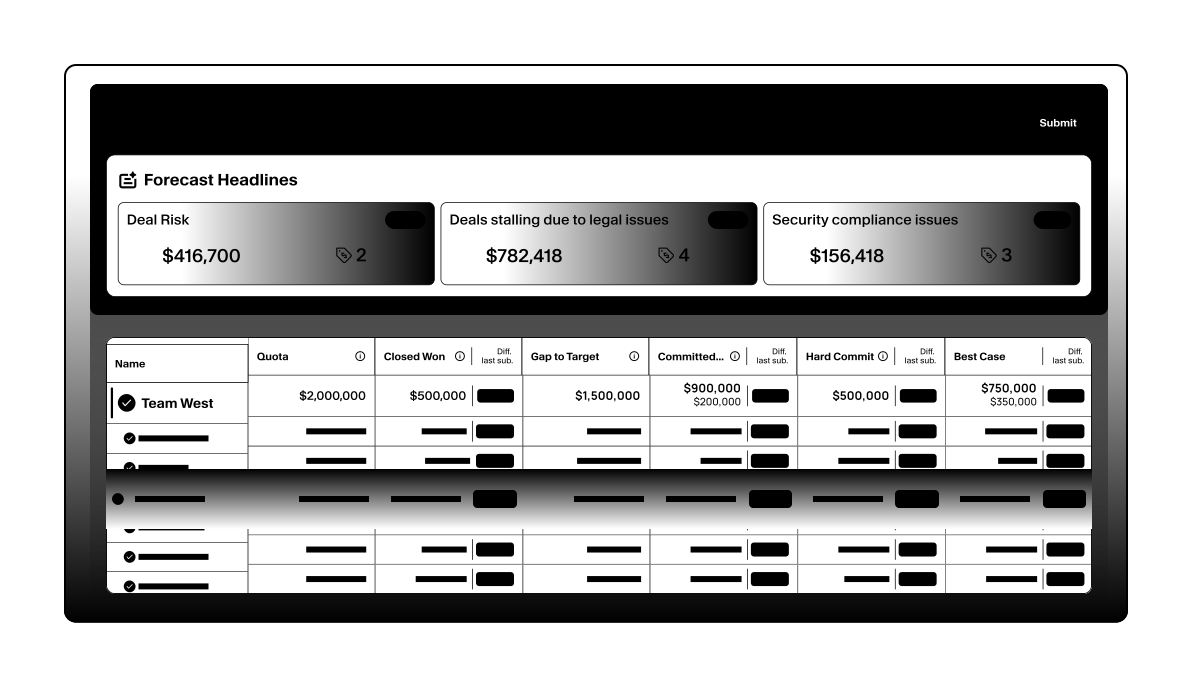
Which deals are real?
Know before the call. Spot risk before it becomes a miss. Cover the quarter before it closes.
