
TRUSTED BY 100,000+ Sellers AT TOP ORGANIZATIONS
4.5/5 (630 Reviews) on G2









Visibility into activity, pipeline, and execution fuels better decisions, faster corrections, and more predictable outcomes - without requiring reps to change their workflow.

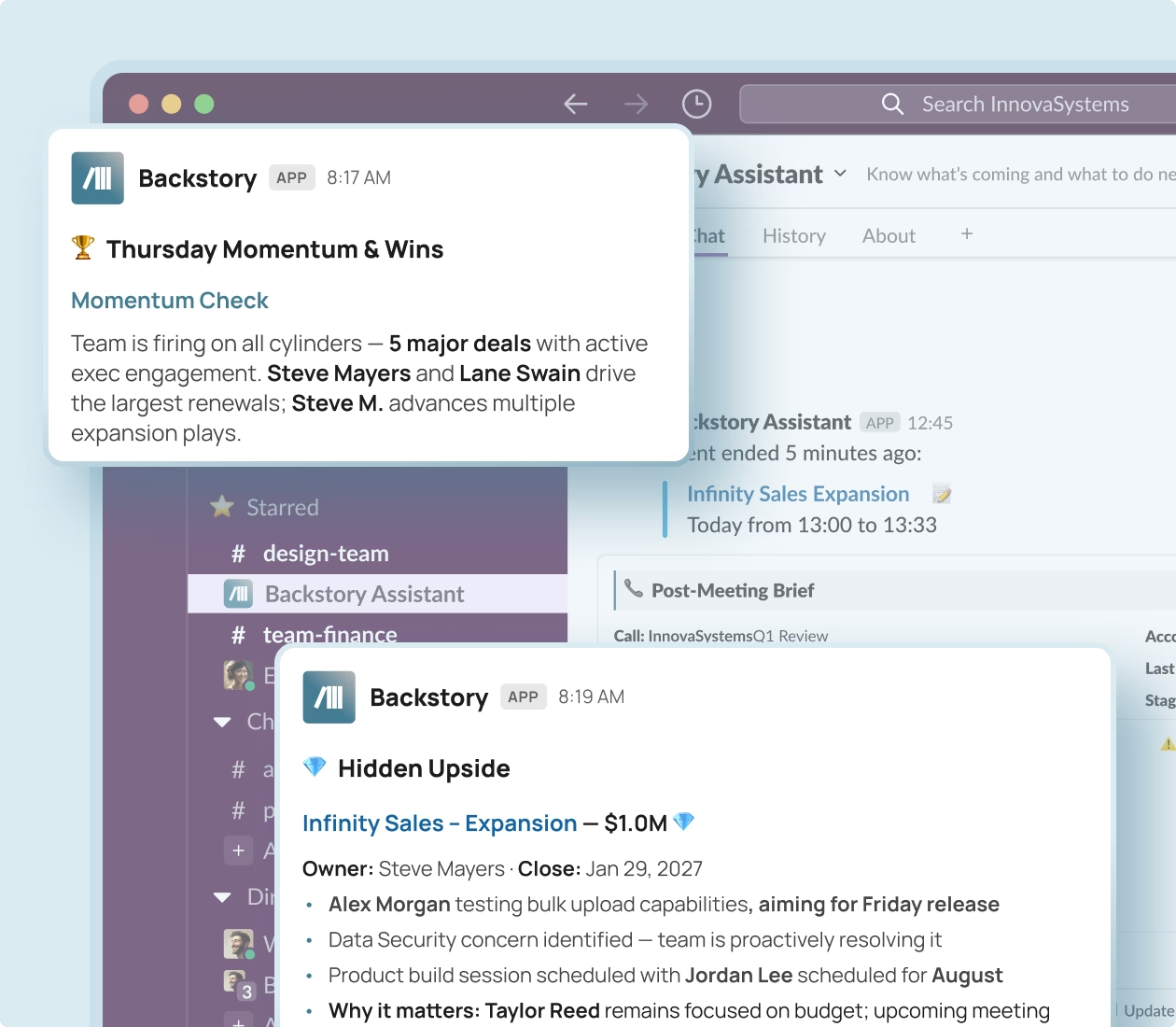
The answer reaches your team before they think to ask.
Most AI waits. It hands a rep a blank box and asks them to know the right question. Most never do, and the tool goes unused. Flip it.
- The deal summary lands in the inbox Monday morning.
- The alert finds the manager the moment a deal starts to slip.
- The account answer shows up inside the chat tool already open on the screen.
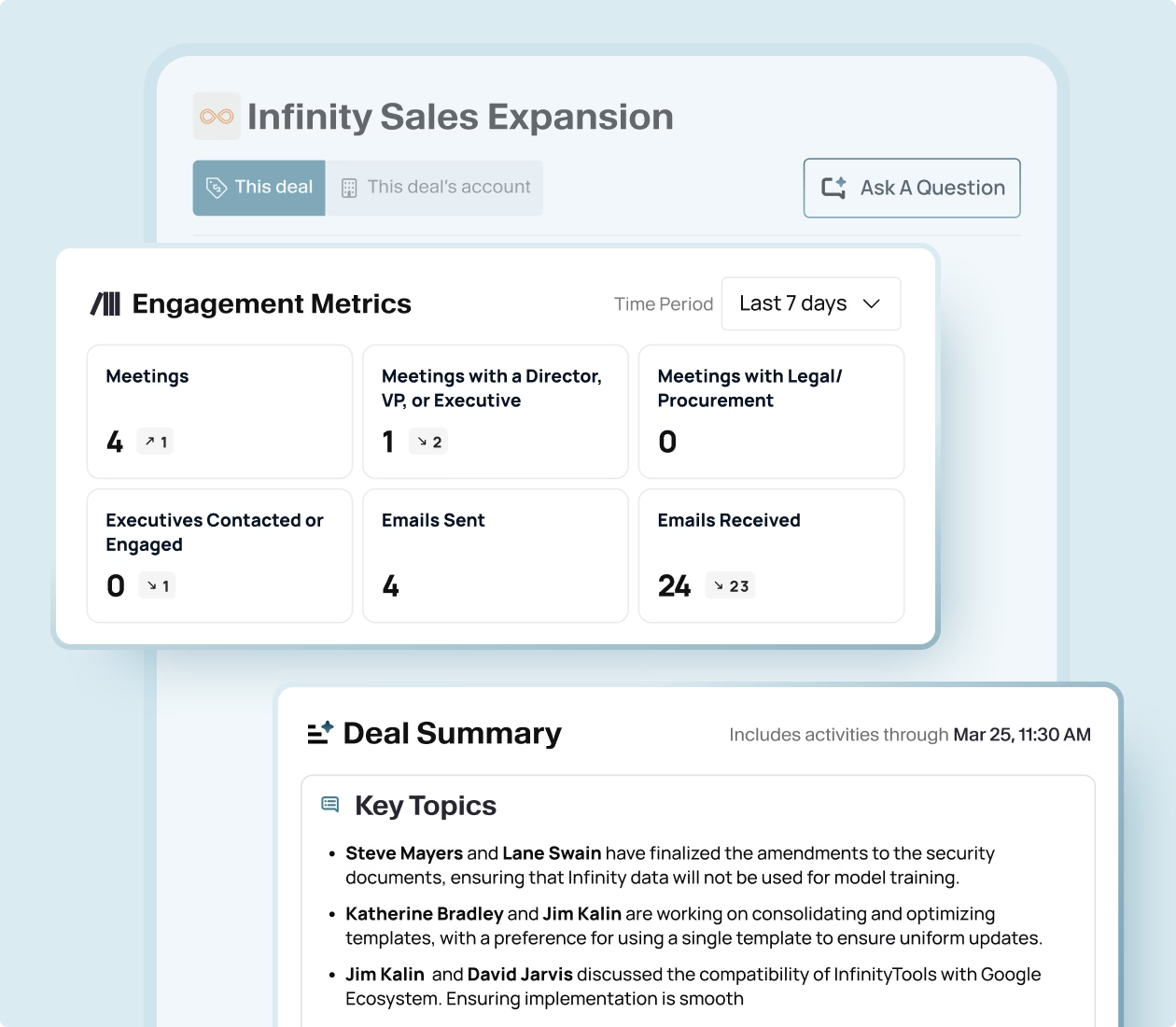
One answer everyone can run a forecast on.
On its own, a model answers the same question differently every time you ask it. A foundation underneath gives everyone the same one.
- See the same account the same way; whether you're the rep, the manager, or the CRO.
- One source of truth behind every pipeline review and deal review.
- A record that holds from this quarter to the next, not a fresh guess each time.

Build what makes you different. Skip the part that doesn't.
Your team builds the parts that fit how you sell. The hard, invisible part underneath is already done.
- Build the dashboard, the weekly deal report, or the custom agent for your business, on data that's ready to use.
- Skip rebuilding the plumbing: capturing every email, meeting, and call, matching it to the right account, filtering out what doesn't belong.
- Build with the Backstory team alongside you, and reach the answers from the LLM your team already uses.
from the blog
Your LLM is only as good as the data you feed it.
A smart model with nothing real behind it answers with a shrug. See why the data, not the model, decides whether the answer holds up.
FAQ
Can't I just point an LLM at our data and get the same answer?
For one question, yes. Across thousands of users, every day, it's a different story. A model builds the answer from scratch every time, so the same question returns a different answer to your rep, your manager, and your CRO and you pay to reprocess the full context on every ask. Backstory matches and distills the data once, then returns one answer on demand. Build on that. Don't rebuild it.
What should we build ourselves, and what should we not?
Build the parts that make you different: the workspace your team opens, the workflow shaped to how you sell, the agent that fits your business. Don't rebuild the foundation underneath, matching activity to records, filtering noise, and distilling it into answers at scale. That layer took years and never stops needing work. The strongest customers do both.
We have engineers. Why not build the whole thing?
You can build a first version fast. The expense is everything after: connected platforms change their APIs, matching rules drift, and someone has to own all of it long past launch. The visible part is cheap to build; the part underneath never stops costing you. Point your engineers at what sets your business apart, and stand on a foundation already refined across many enterprises. The Backstory team builds the custom parts with you, so the workflow is yours without the upkeep.
Our sellers won't adopt another tool.
They won't have to. The answer comes to where they already work: their inbox, an alert, the chat tool open on their screen. No portal to log into, no prompt to learn. At Aveva, a deal summary lands in the inbox every Monday and gets read. Adoption stops being a training problem when the answer reaches the seller instead of the other way around.
How does this keep our AI costs down?
Consumption pricing charges for every token a model reads to build an answer. When a hundred reps ask the same question a hundred ways, you pay a hundred times. Backstory generates the answer once and returns it on every ask after that, without re-running the expensive call. Your cost tracks the work, not the number of times someone asks.
Will this work with the AI tools we already use?
Yes. Backstory's answers reach your team inside the LLM they already use; such as Claude, ChatGPT, or Gemini. Through our MCP Server, alongside your CRM and internal systems. Red Hat built a single assistant on several sources, Backstory's among them. You assemble the experience. Backstory keeps the answers grounded.