

Trusted by sales leaders at NVIDIA, OpenAI, Red Hat, HPE, Zscaler, and Rubrik - and 100,000+ sellers daily.

For a company our size, multiply those time savings across every rep and manager globally - Backstory basically pays for itself before you even count the deals caught earlier.

Reagan Lucas
Sales Process Coach


Visibility into activity, pipeline, and execution fuels better decisions, faster corrections, and more predictable outcomes - without requiring reps to change their workflow.
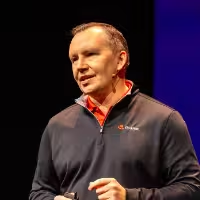
Andrew Brown
Senior Vice President and Chief Revenue Officer






With Backstory, we removed the guesswork from our sales process. The data is clean, insights are actionable, and our team finally has a shared view of every deal in pipeline.
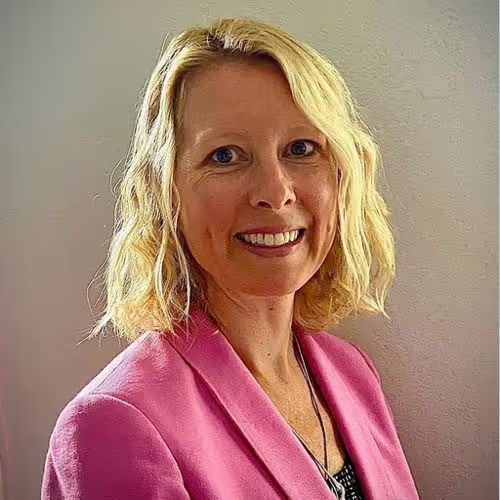
Esther Friend
Former VP of Sales Efficiency and Transformation

If reps aren't in a multi-threaded deal, Backstory flags it. That lets us act fast - asking who we need to get in front of before the gap becomes the reason we lost the deal.

Toby Carrington
Chief Business Officer

With Backstory, you see if reps are single-threaded and the quality of their interactions. It's one thing to diagnose a pipeline problem. Backstory helps you actually fix it.

Mitch Beck
Head of Digital Sales at Pluralsight

We started thinking about automation and deal tracking. We quickly learned Backstory supports the entire revenue cycle. That shift - and that partnership - changed how we sell.

Jonathan Gray
Senior VP at TTEC

With Backstory, we can see what's actually happening in the field - and we know exactly what to work on, whether that's coverage gaps or finding the right people for key roles.

Eric Chapman
Vice President Sales Operations and Enablement

What matters is adoption, enforceability, and CRM compliance. Backstory integrated in a few clicks and guarantees high usage of our chosen sales methodology. Simple as that.

Spencer Hodson
Vice President of Global Sales Operations and Development



When you step into a new leadership role, you wonder if you can trust the existing data. Because of Backstory, I know I can - and I run my entire sales org confidently off it.

Julian Dimery
Sr. Director of Sales

Every customer-facing activity is captured in Salesforce automatically - contact created, tied to the right opportunity, no extra effort from the team. CRM hygiene solved.

Clark Green
VP, Global Revenue Operations