
Sales Pipeline Health: Catch Deal Risk Early
Your pipeline is trying
to tell you something.
It shows what's healthy, what's slipping, and what to do about it - before the forecast call.

How much pipeline do you actually have? Not what reps say. Measured against what it takes to hit the number.
Deals that aren't moving are dying.
Most teams find out too late.
Not every open opportunity is a real opportunity. Do yours have the right contacts, the right engagement, and an actual shot at closing?
Reps work in email and calendar. Most of that never makes it into the CRM. What you're looking at isn't the full picture.
Pipeline inspection
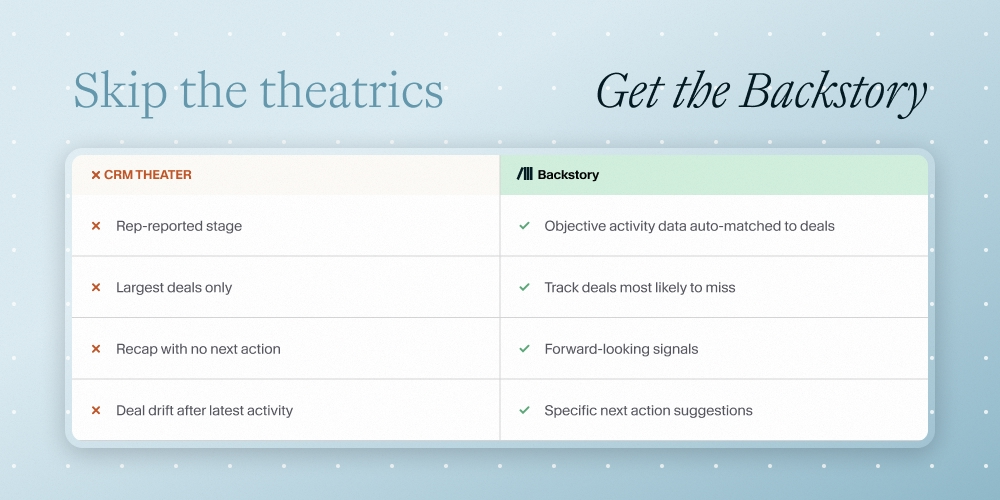
The difference between a real pipeline review and theater
- Grounded in objective activity data — not rep storytelling
- Covers the deals most likely to miss, not just the largest
- Surfaces forward-looking signals before deals officially stall
- Every review ends with someone owning something specific, not a vague "let's circle back."
The visibility problem
Reps work across email, calendar, calls, and messaging apps. Almost none of it lands in the CRM without deliberate effort — and that effort competes with selling time. The result is a system of record that records intent, not reality.
See the full picture before the quarter gets away from you.
Deal health scoring
Know what to do next
You can see the pipeline. You can read the notes. But you can't answer the question that matters: which of these deals actually needs my attention today?
Backstory completes the picture by turning activity and reasoning into specific, prioritized actions.
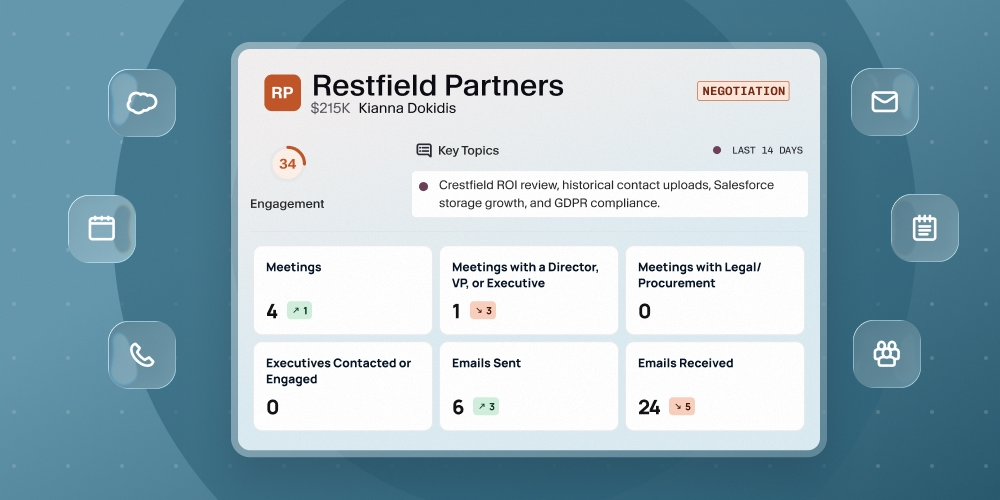
- Engagement recency — days since last meaningful buyer interaction
- Stakeholder coverage — how many contacts are active and at what level
- Meeting cadence — accelerating (healthy) or decelerating (at risk)
- Champion strength — actively advocating or gone passive
Go deeper on real Pipeline Inspection
See what your pipeline health
actually looks like.
Backstory analyzes your full sales activity — not just what lives in the CRM.
Which deals are real?
Know before the call. Spot risk before it becomes a miss. Cover the quarter before it closes.
